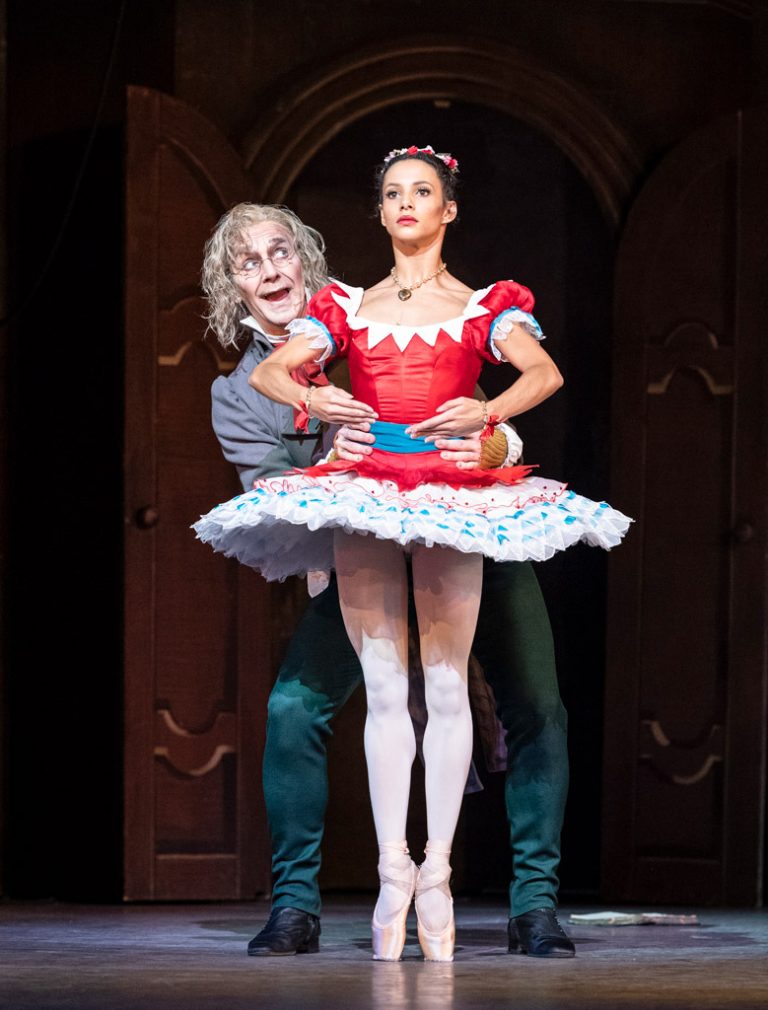
Coppélia
Coppélia, first performed in 1870, the year of the outbreak of the Franco-Prussian War, tends to be advertised as a ‘comic ballet’ set to music by Delibes, of flower-duo fame. Coppélia is on the face of it absurd. A young man called Franz has the world’s loveliest fiancée, Swanilda. Everything is set for the wedding. But then Franz is intoxicated by a strange creature he sees in the village square, a life-like doll made by the local inventor-cum-magician Coppélius, who is untouched by human affections, living only for his designs. The drama of the ballet unfolds as Swanilda tries to win Franz back; yet such is Coppélia’s gracefulness that we are almost tempted to hope that Swanilda will fail and that love might somehow make the virtual real. This might all have seemed outlandish fantasy 150 years ago. Now the sight of a man made to choose between a virtual and an embodied-ensouled love is terribly real. I was struck by the power of this story when I saw it performed by students of the Roman Opera Ballet last week. Those youths showed us that the drama of Coppélia isn’t just some laughable old drivel; it is the stuff of contemporary tragedy.